From a prompt to a film.
Studio's AI director makes a film the way a small studio does: a story, a voice, a look, a storyboard, the drawing, a review. Here is each stage, on the honey film.
What the film’s page shows
- 01Writing the narrationOne question, one picture that carries the answer, at most four steps.
- 02Recording the voiceAn open text-to-speech voice reads it, and every word is timed.
- 03Choosing the lookOne style, one palette, one place for the whole film.
- 04Planning the shotsOne shot for each line, each handing on to the next without a cut.
- 05Building the scenesEvery picture and every move is written as code.
- 06Looking and fixingChecks run on every frame, and the director fixes what it sees.
- 07Rendering full qualityThe full film replaces the preview on its page.
The prompt
It starts with one sentence.
Say what the film is about, often as a question for it to answer. Studio also takes a link or your own footage.
Pick a shape and a length: 9:16, 1:1, 4:5 or 16:9, and 15, 30, 60 or 90 seconds. A new film is 9:16 and 30 seconds unless you change it.
Writing the narration
A story with one idea.
The director is the AI model you connect. It writes the film as words first: one question, one picture that carries the answer, and at most four steps, each causing the next.
For honey the picture is a single drop of nectar. A bee sips it, passes it on, the bees fan it dry and a lid of wax seals it. Seven sentences, 69 words.
- How do bees make honey?
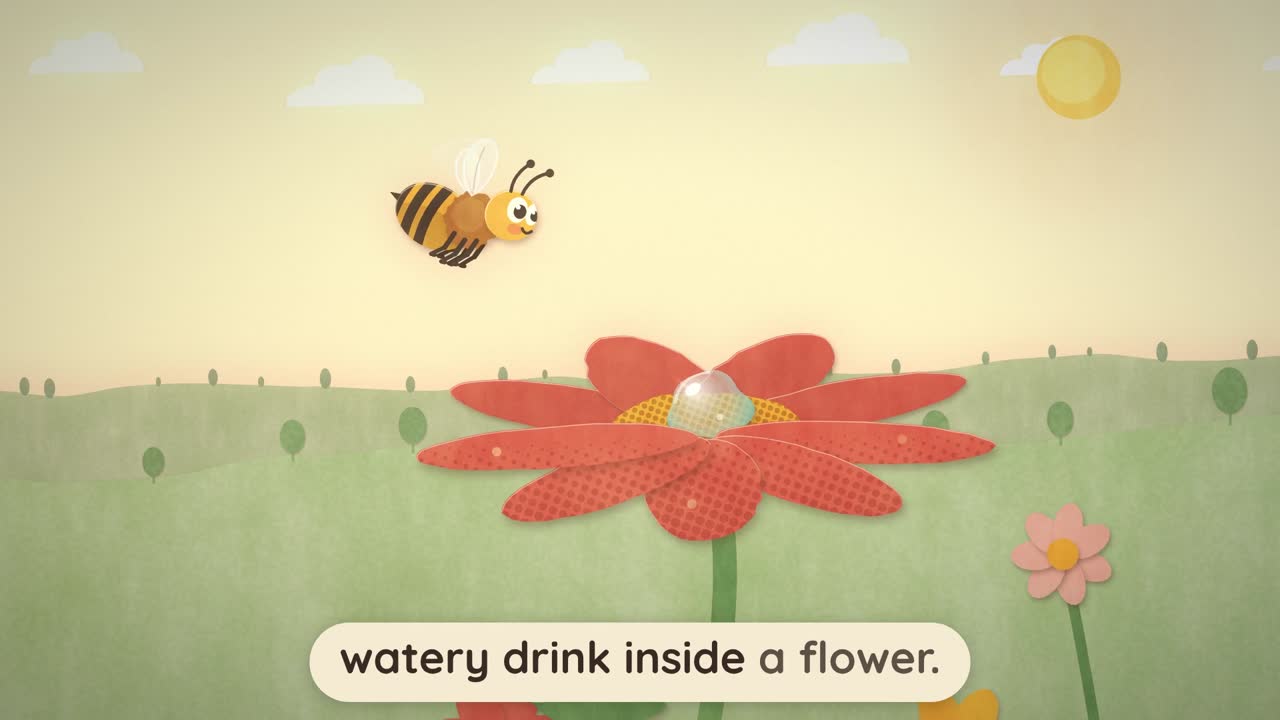
- It starts as nectar, a sweet, watery drink inside a flower.
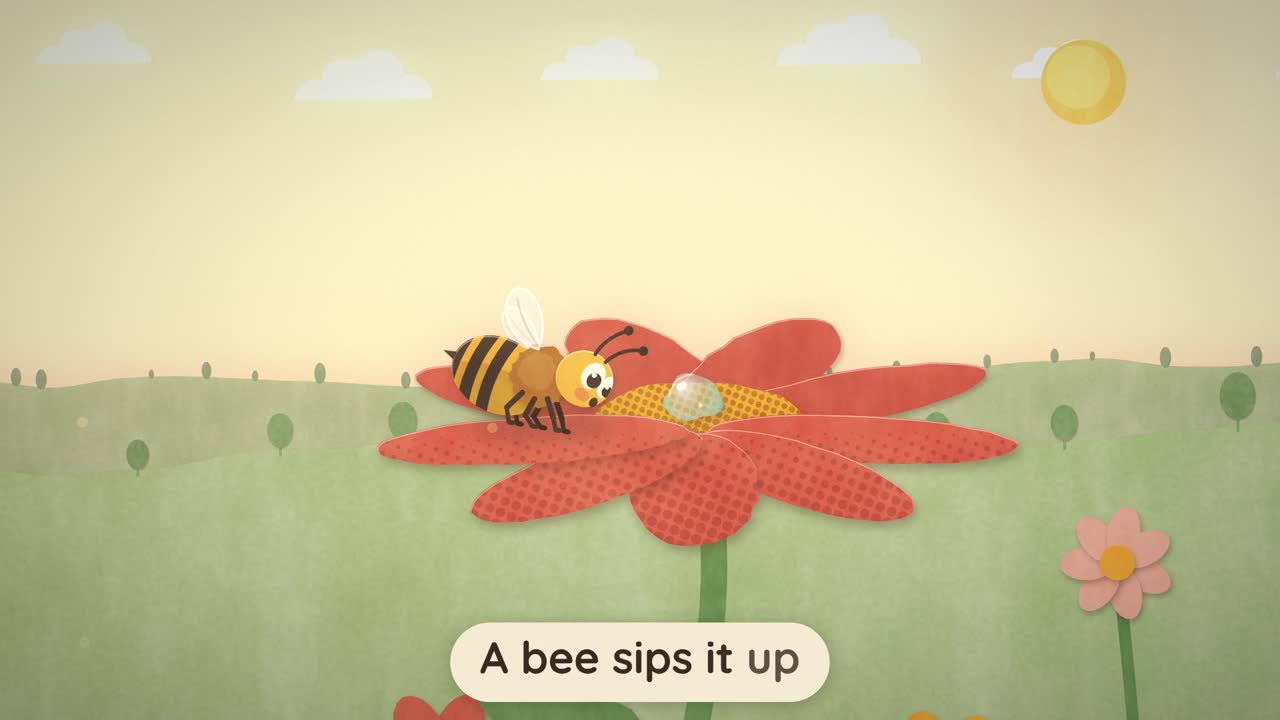
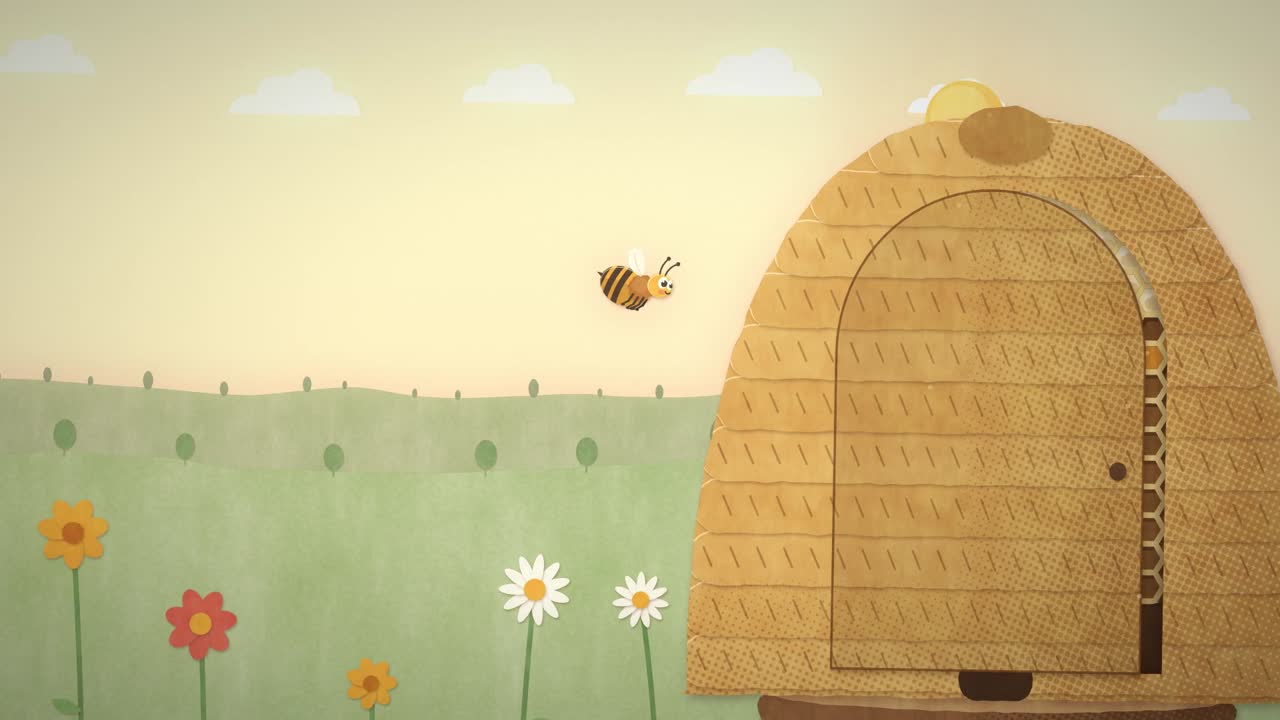
- A bee sips it up and flies it home.
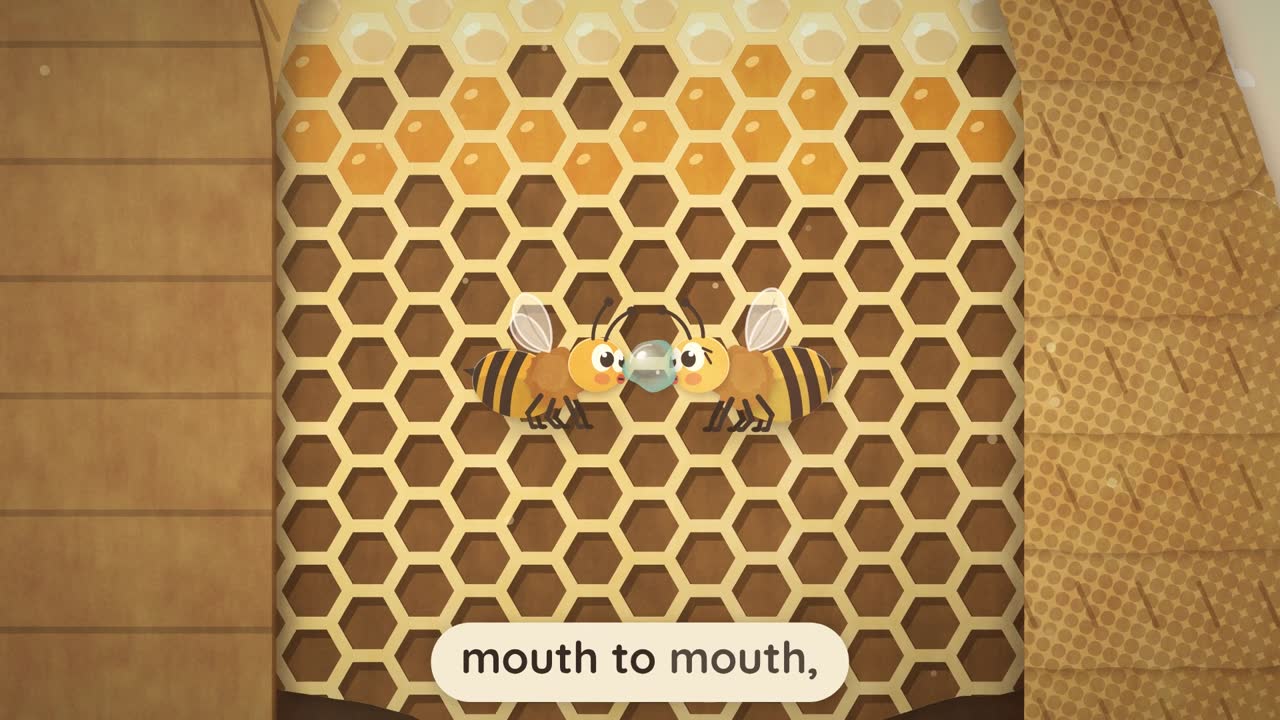
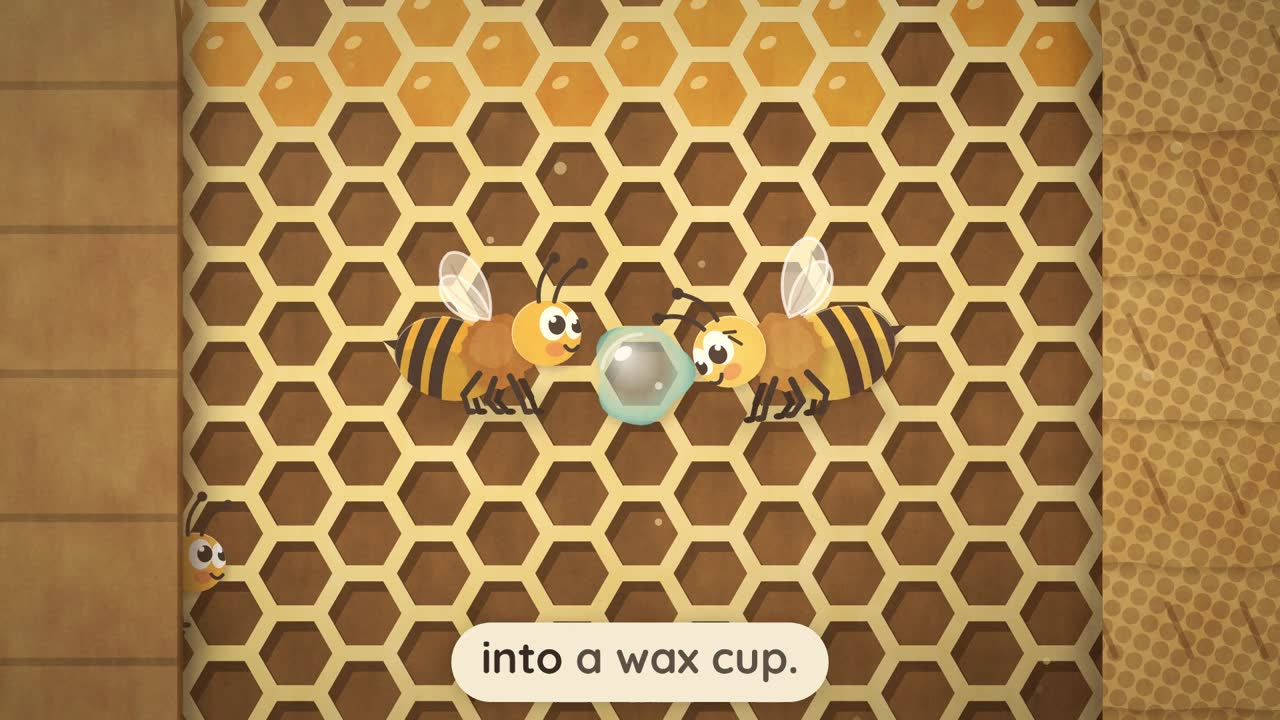
- There, she passes it, mouth to mouth, to a friend, who tucks it into a wax cup.
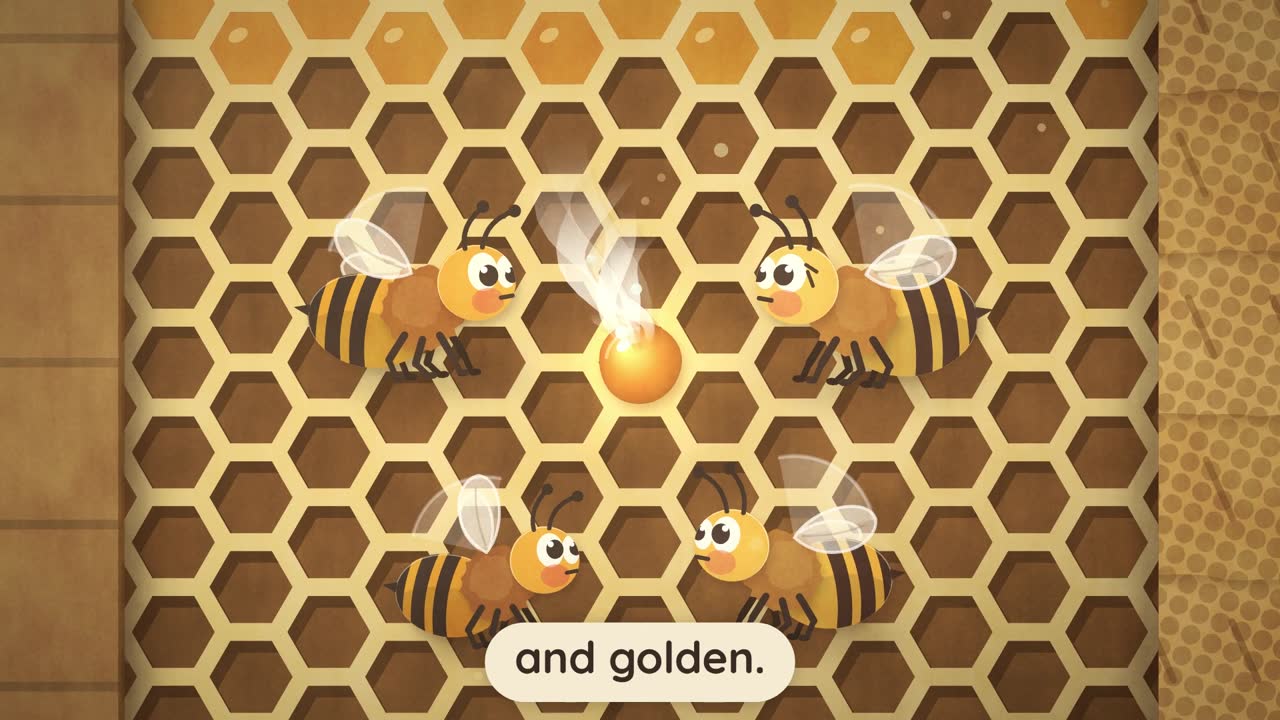
- Then the bees fan their wings, the water floats away, and the drink turns thick and golden.
- They seal it with a lid of wax.
- That's honey.
Recording the voice
Every word on its frame.
An open text-to-speech voice reads the script, and the time of every word is measured, so each line lands on its picture.
Music sits under the voice and dips while it speaks. Sound effects are placed on the frames of their actions: popcorn has 73, from the sizzle of the pan to the pop. The mix is set to −14 LUFS.
- How0.05 s
- do0.18 s
- bees0.38 s
- make0.60 s
- honey?0.82 s
The sound of the popcorn film over its 30 seconds; a dot where each line starts.
Choosing the look
One look, written down first.
Before a thing is drawn, the director writes down one style, one palette and one place for the whole film, and keeps to them.
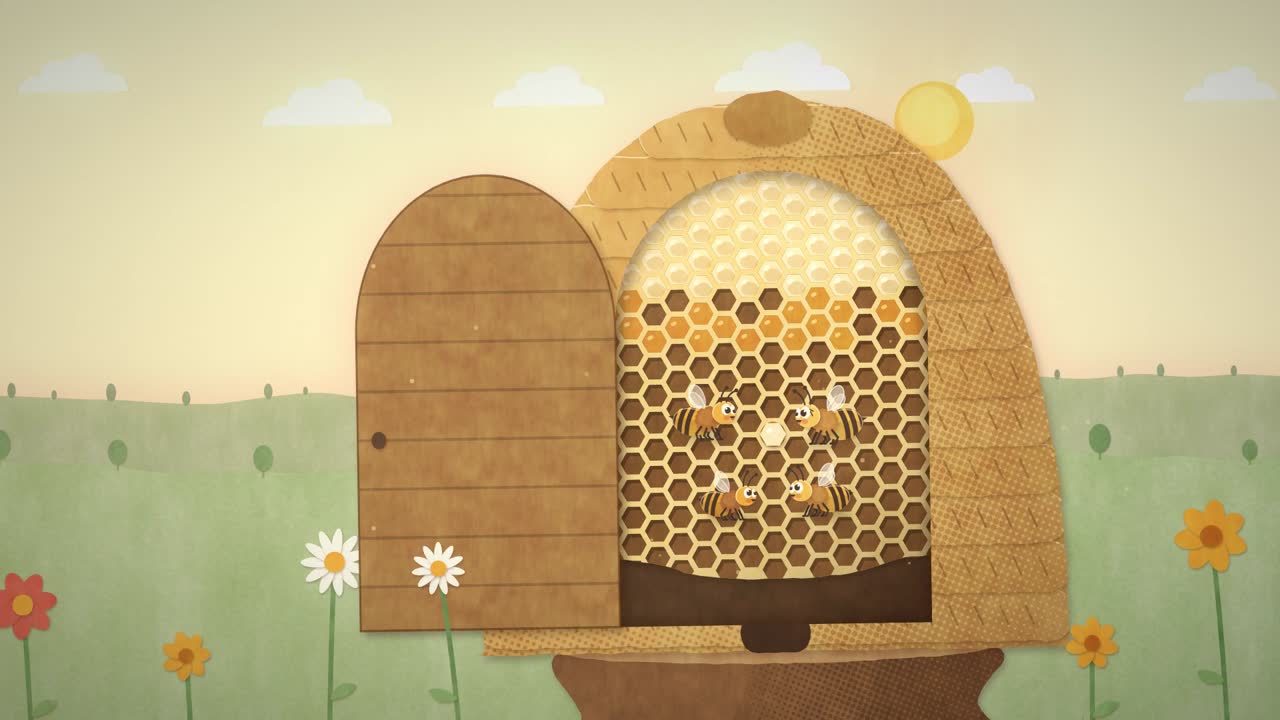
Honey is a paper meadow in golden afternoon light, built like a pop-up book: hand-cut edges, soft shadows and twelve named colours.
- Paper cream
- Peach
- Marigold
- Amber
- Cocoa ink
- Straw
- Walnut
- Wax
- Sage
- Meadow
- Coral
- Nectar
Planning the shots
One shot for every line.
Each narrated line gets one shot: what is on screen, what moves, and where the camera is.
Every shot hands on to the next inside the picture: the hive door swings open, the camera pushes into a kernel and its shell turns see-through. Neither film has a hard cut.
Building the scenes
Every picture is code.
No image or video model draws a frame. The director writes code that draws and moves each thing: the grain of the paper, the bees and their faces, every cell of the comb, the drop as it thickens.
Honey is about 560 lines of it and popcorn about 580, rendered frame by frame at 30 frames a second.
// u: 0 watery nectar .. 1 honey; wobble shrinks as it thickens
function drawDrop(x, cx, cy, r, u, t) {
  const wob = (1 - u) * 0.09, pts = [];
  for (let k = 0; k < 36; k++) {
    const a = (k / 36) * TAU;
    const rr = r * (1 + wob * Math.sin(a * 3 + t * 7.5));
    pts.push([cx + Math.cos(a) * rr, cy + Math.sin(a) * rr]);
  }
  const g = x.createRadialGradient(cx, cy, r * 0.1, cx, cy, r * 1.1);
  g.addColorStop(0, mix([255, 255, 255, 0.8], [250, 214, 120, 1], u));
  g.addColorStop(1, mix([105, 165, 160, 0.95], [142, 74, 18, 1], u));
  x.fillStyle = g;
  x.fill(path(pts));
}
Looking and fixing
It looks before you do.
Checks run on every frame: flashes, things that pop in or out, sudden jumps of the camera, frozen stretches, caption timing, legibility and loudness. A film that fails a check is fixed and checked again, or kept as a draft that says so.
The director also looks at its own frames, as an animator reviews a cut, and changes what reads wrong. These are its notes on honey.
The drop read as a white pearl.
Made it see-through, with a cool rim, turning amber as it dries.
A comb full of amber cells hid the one cup that matters.
Kept stored honey to a band at the top.
The flower close-up was too small.
Made the flower bigger and moved the camera in.
The hive door swung open in two frames.
Eased it open over a second and a quarter.
The opening was a wide shot with a tiny bee.
Moved in on the meadow; the bee enters from the edge.
The title was hard to read against the sky.
Darkened it until it read clearly.
- Flashes
- Things that pop in or out
- Sudden jumps of the camera
- Frozen stretches
- Caption timing
- Text legibility
- Loudness
Rendering full quality
A preview first, then the film.
The film’s page names each stage while the director works. Unless the director runs on your own computer, a preview at lower quality appears first, and the full film takes its place when it is ready.
A 30 second film takes about 35 to 50 minutes today. You can leave the page: the film keeps going and waits in Films.
- Shape
- 9:16, 1:1, 4:5 or 16:9
- Length
- 15, 30, 60 or 90 seconds
- Picture
- 30 frames a second, 1080 pixels on the short side
- Sound
- −14 LUFS, peaks under −1 dBTP